
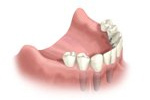
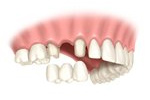
 A traditional bridge involves grinding down adjacent teeth to support the bridge. It is a stable solution with good esthetics and function that is fairly easy to install. However, this alternative has two main disadvantages: continuous bone resorbtion in the edentulous area, and sacrificing healthy teeth on behalf of the bridge.
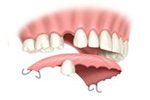 This is not a permanent alternative to a lost tooth. It is unstable and loosely attached, which affects both function and comfort. A removable partial denture is made of plastic – a material that can’t create the same esthetic result as a ceramic crown. The benefits are few but do exist: adjacent teeth aren’t affected. It is easily and quickly installed and relatively cheap.
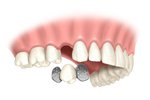 This alternative has some clear advantages: it is quickly installed, functions well and, since it is made of ceramic, it gives a high esthetic result. Moreover, natural healthy teeth aren’t affected. But it is not very permanent. The resin-bonded bridge will eventually come off – probably after just a couple of years – and will then have to be reinstalled.