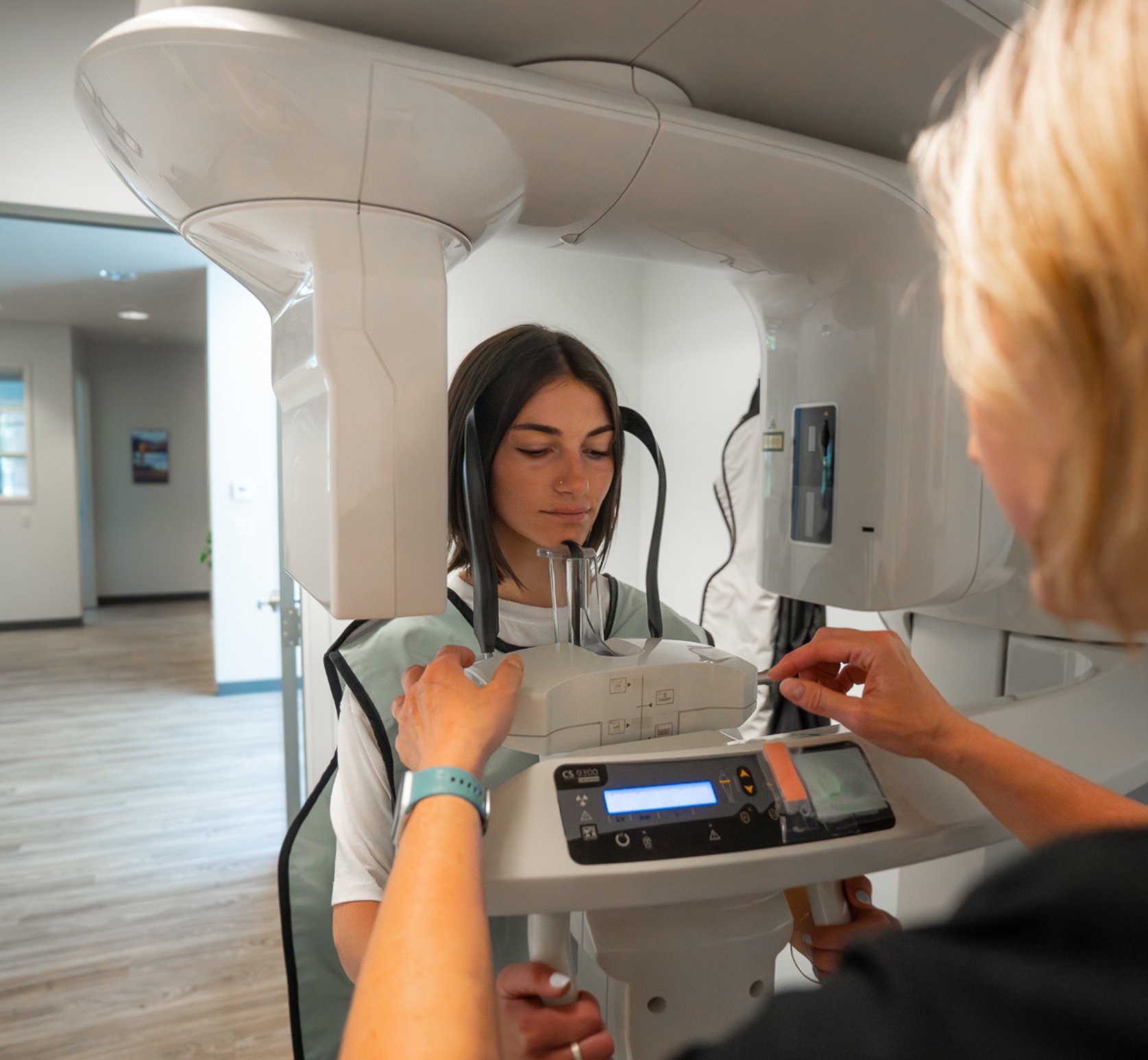
At Bend Oral Surgery, we provide advanced oral surgery diagnostics using cutting-edge technology to ensure accurate diagnoses and effective treatment planning. Our comprehensive services include 3D imaging (CBCT scans), digital X-rays, intraoral cameras, and oral cancer screening, allowing us to detect and address complex conditions with precision.
Whether you need dental implants, bone grafting, or facial trauma care, our advanced diagnostic tools help us deliver the highest standard of care for every patient.
An oral surgeon offers specialized expertise and advanced technology to accurately diagnose complex conditions and develop precise, personalized treatment plans.
At Bend Oral Surgery, we provide advanced diagnostics and screening, including 3D CBCT scans, digital X-rays, oral cancer screenings, and jawbone assessments for precise, effective treatment planning.
Advanced oral diagnostics involve the use of specialized imaging, screening systems, and evaluation protocols to detect conditions that are not visible during a routine dental exam. At Bend Oral Surgery, advanced diagnostics allow the surgeon to identify anatomical variations, bone density levels, sinus considerations, oral pathology, airway restrictions, and nerve positioning well before surgery begins. This level of detail supports safer dental implant placement, more predictable extractions, and improved surgical planning for patients throughout Central Oregon. These diagnostic insights reduce complications, shorten recovery, and provide a more precise treatment roadmap, particularly for patients who require implants.
Learn more

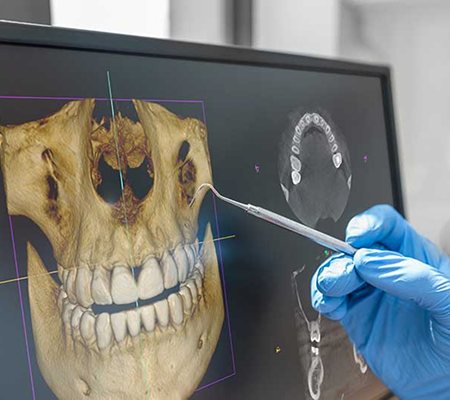
The practice utilizes high-resolution digital imaging and three-dimensional Cone Beam CT (CBCT) scanning technology to evaluate the oral and maxillofacial structures. CBCT imaging produces a 3D representation of the jaws, sinus cavities, dental roots, airway, and surrounding facial anatomy, which gives the surgeon a clear understanding of bone thickness, nerve position, and spatial relationships that are essential in surgical procedures. This technology enhances implant planning, extraction mapping, orthodontic coordination, biopsy diagnostics, and trauma evaluation, ultimately improving patient safety and clinical predictability. Learn more
Yes. Most oral surgical procedures require advanced imaging or diagnostic screening before treatment begins. Procedures such as dental implant placement, bone grafting, and biopsy evaluation depend heavily on accurate imaging and structural assessment. Performing diagnostics during the consultation also reduces the number of visits for patients traveling from Bend, Redmond, Sunriver, Sisters, and surrounding Central Oregon communities. These diagnostics protect vital structures during surgery and allow the surgeon to anticipate whether additional steps are needed.
Yes. The diagnostic imaging systems used at Bend Oral Surgery are designed to minimize radiation exposure while providing significantly more clinical detail than standard dental radiographs. Tools such as CBCT concentrate imaging on the head and neck region rather than the full body, reducing unnecessary exposure while enhancing diagnostic accuracy. These technologies are widely used in oral and maxillofacial surgery for early detection of pathology, trauma assessment, implant planning, and surgical navigation, making them a critical part of modern surgical care.
Most imaging and diagnostic screening procedures are completed during the initial consultation appointment. After screening, the surgeon reviews the findings with the patient in real time and explains treatment pathways, anesthesia options, risks and benefits, and post-operative expectations. This single-visit diagnostic approach streamlines care and supports faster treatment scheduling for patients with active lifestyles or travel constraints.
Website Design by Meadow Creek Marketing, Inc.