
Many people think jaw alignment is only about having straight teeth or an attractive smile. In reality, proper jaw alignment plays an important role in how you chew, speak, breathe, and even how comfortable your jaw feels throughout the day.
If you have jaw pain, difficulty biting, frequent headaches, or notice that your teeth do not fit together properly, it may be time for a professional evaluation. Understanding the signs of jaw alignment problems can help you determine whether treatment may be beneficial.
What Is Jaw Alignment?
Jaw alignment refers to how your upper jaw (maxilla) and lower jaw (mandible) fit together when your mouth is closed. When the jaws are properly aligned, your teeth come together comfortably, your jaw joints move smoothly, and everyday activities like eating and talking feel natural.
Jaw alignment is different from tooth alignment. While braces and clear aligners move teeth into better positions, they cannot always correct problems caused by the size or position of the jawbones themselves.
In some cases, a person may have straight teeth but still experience jaw alignment issues because the upper and lower jaws do not fit together correctly.
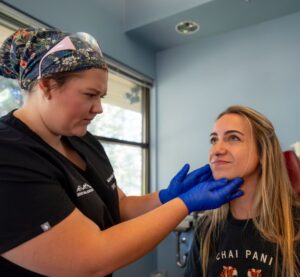
Jaw alignment problems are more common than many people realize. Research from the National Health and Nutrition Examination Survey (NHANES III) found that only about 35% of U.S. adults have well-aligned lower front teeth, while approximately 20% have some degree of bite irregularity, known as malocclusion. Researchers also estimated that 57% to 59% of Americans have at least some need for orthodontic treatment, although only a small percentage have jaw discrepancies severe enough to require corrective jaw surgery. These findings highlight that while many bite issues can be treated with orthodontics alone, others involve the jawbones themselves and may require evaluation by an oral and maxillofacial surgeon.
Common Signs of Jaw Alignment Problems
Jaw alignment issues can develop gradually, making them easy to overlook. Some of the most common symptoms include:
- Difficulty chewing certain foods
- Teeth that do not meet evenly when biting down
- Frequent jaw pain or soreness
- Clicking, popping, or locking of the jaw
- Chronic headaches or facial pain
- Excessive wear on certain teeth
- Difficulty speaking clearly
- A bite that feels “off”
- Facial asymmetry or an uneven jawline
While experiencing one of these symptoms does not necessarily mean you need surgery, they can indicate that your bite should be evaluated by an experienced oral and maxillofacial surgeon.
What Causes Jaw Misalignment?
Several factors can contribute to jaw alignment problems. Some people are born with differences in jaw growth that become more noticeable during adolescence or adulthood. Others develop alignment issues following facial trauma or injury.
Jaw alignment may also be influenced by genetics, developmental conditions, arthritis affecting the jaw joint, or differences in how the upper and lower jaws grow over time. Because every patient is unique, determining the underlying cause is an important part of creating the right treatment plan.
How Are Jaw Alignment Problems Treated?
Treatment depends on the severity of the condition and the underlying cause. For mild cases, orthodontic treatment may be enough to improve the bite. In other situations, oral appliances or conservative therapies may help relieve symptoms.
However, when the problem involves the position of the jawbones rather than the teeth, corrective jaw surgery, also known as orthognathic surgery, may be recommended. This procedure repositions one or both jaws to improve function, bite alignment, and facial balance.

Corrective jaw surgery is often performed in coordination with an orthodontist to achieve the best long-term results.
Recent research continues to demonstrate that correcting jaw alignment can improve much more than a patient’s bite. A 2024 systematic review of 23 prospective studies involving more than 1,000 patients found consistent improvements in oral function, chewing ability, facial appearance, confidence, and overall quality of life following orthognathic surgery. The researchers concluded that patients experienced significant improvements in both functional and psychosocial outcomes after treatment.
It is important to remember that most people with jaw alignment concerns will never require surgery. A comprehensive evaluation helps determine whether orthodontic treatment alone is appropriate or whether corrective jaw surgery would provide the best long-term outcome.
When Should You Schedule an Evaluation?
Many patients live with jaw discomfort for years because they assume it is normal.
If you experience persistent jaw pain, difficulty chewing, uneven tooth wear, recurring headaches, or a bite that never feels comfortable, it is worth scheduling an evaluation. Early diagnosis can help identify the cause of your symptoms and determine whether treatment may prevent additional problems in the future.
A comprehensive examination includes reviewing your symptoms, evaluating your bite, and using advanced imaging to better understand the relationship between your teeth and jawbones.
Jaw Alignment Treatment in Bend, Oregon
If you are experiencing symptoms of jaw misalignment, the team at Bend Oral Surgery can help determine the cause and discuss your treatment options.
Dr. Donald DeLisi is an experienced oral and maxillofacial surgeon serving patients throughout Bend, Oregon, Redmond, Sisters, Prineville, Madras, and Central Oregon. He provides comprehensive evaluations for jaw alignment concerns, facial injuries, TMJ-related conditions, and corrective jaw surgery, working closely with orthodontists and general dentists when needed.
Every patient’s situation is different, and treatment recommendations are based on your individual anatomy, symptoms, and long-term goals.
If your bite feels uncomfortable or your jaw is not functioning the way it should, scheduling a professional evaluation is the first step toward understanding your options. Dr. Donald DeLisi and the team at Bend Oral Surgery are committed to helping patients throughout Bend, Oregon improve comfort, function, and oral health through personalized, evidence-based care.